
The North America Market
Launched to the market in 2000, Ford sensed an opportunity to successfully break into the North American market. They waited a year to identify what success the Focus would have in the European market first, of course it was a massive success. Then started a plan to launch the car to the North American market in early 2000, production had already started during September 1999 in the Wayne county of Michigan. The MK1 was instantly marketed to a young “up-coming” audience with the purpose that it may encourage long-term brand loyalty.
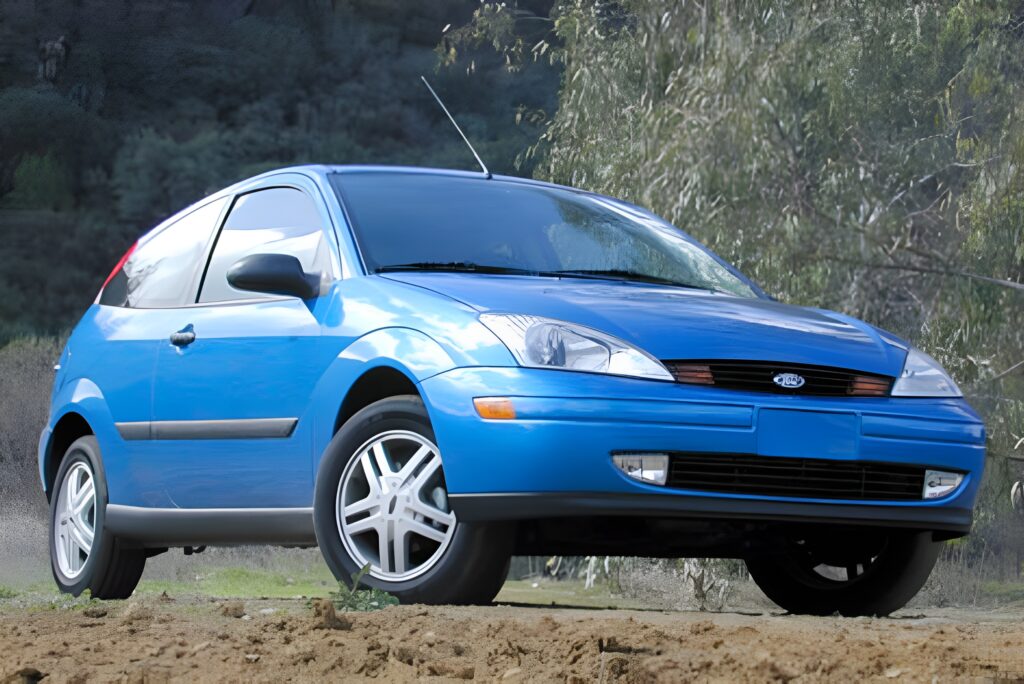
There are many notable differences because of heavy safety legislation. Firstly the bulbous front and rear bumpers protrude from the natural body line to cover the larger crash bars behind them. The front indicators normally located on the front wings, found themselves located behind the front grille assembly. The reverse and fog lights were integrated into the rear cluster assemblies. The bonnet release was operated by a cable instead of the standard key-operated bonnet release. Aside from this, it still felt like any European Focus of course!
The engine options were an interesting subject, the smallest were 2.0-Litre in capacity. The base engine fitted to the LX and SE specifications was a rebranded Ford CVH with fuel injection named ‘Split-Port 2000’. It was an ancient unit which started life in 1981 and used throughout Ford’s small-medium car line-up. It produced 110bhp, not a great deal and wasn’t really suited to the Focus. It was the cause of many recalls due to serious cases of exhaust valve seat recession, even at low mileages.
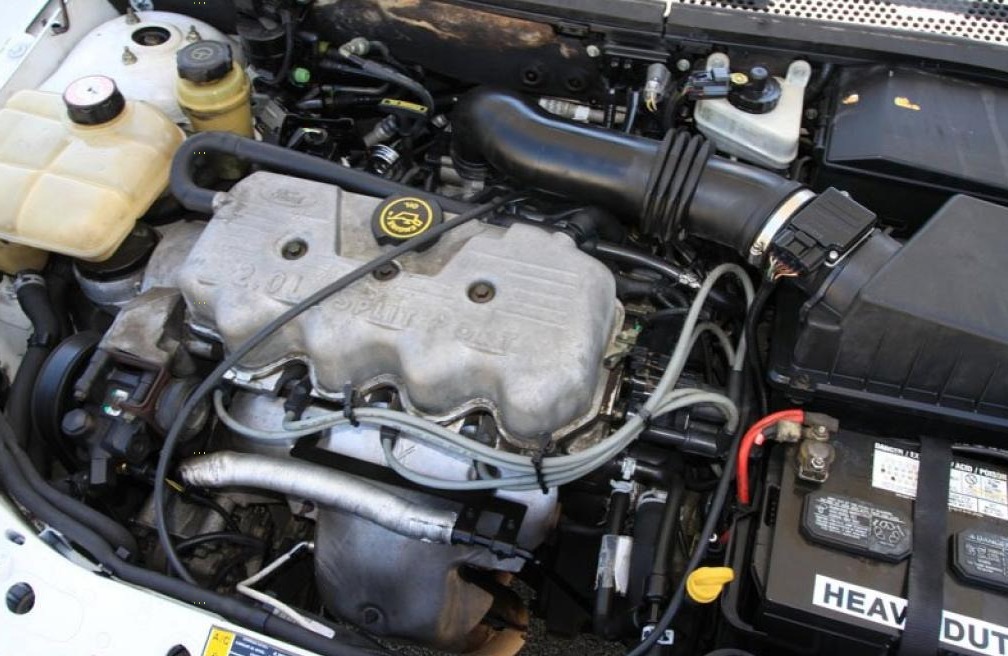
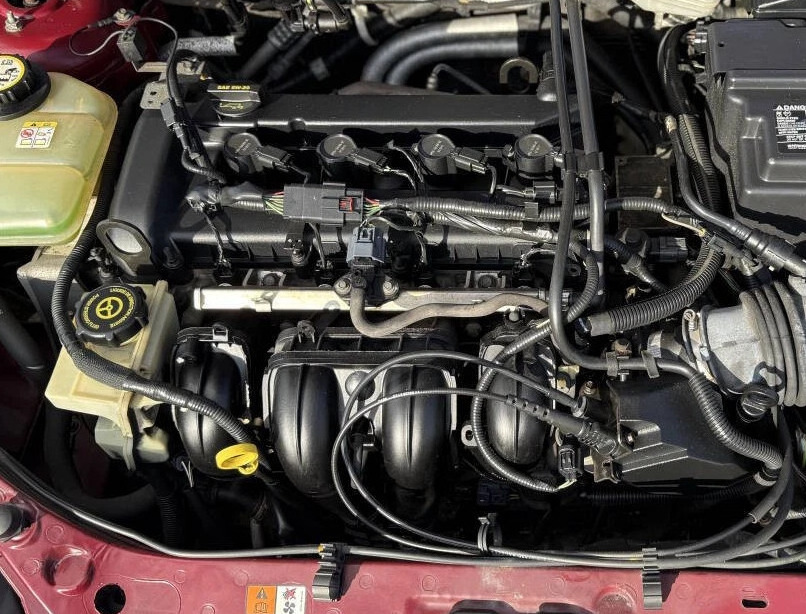
The next engine available was the familiar Zetec-E 2.0-Litre unit, this became a popular engine for the market and a very competent power plant. The other engine was the all-new ‘Duratec’ 2.0-Litre engine rated at a healthy 143bhp. It was joint-developed between Ford and Mazda (which Ford partly owned at the time). The engine later found its way into many European Fords and powered some of Mazda’s range.
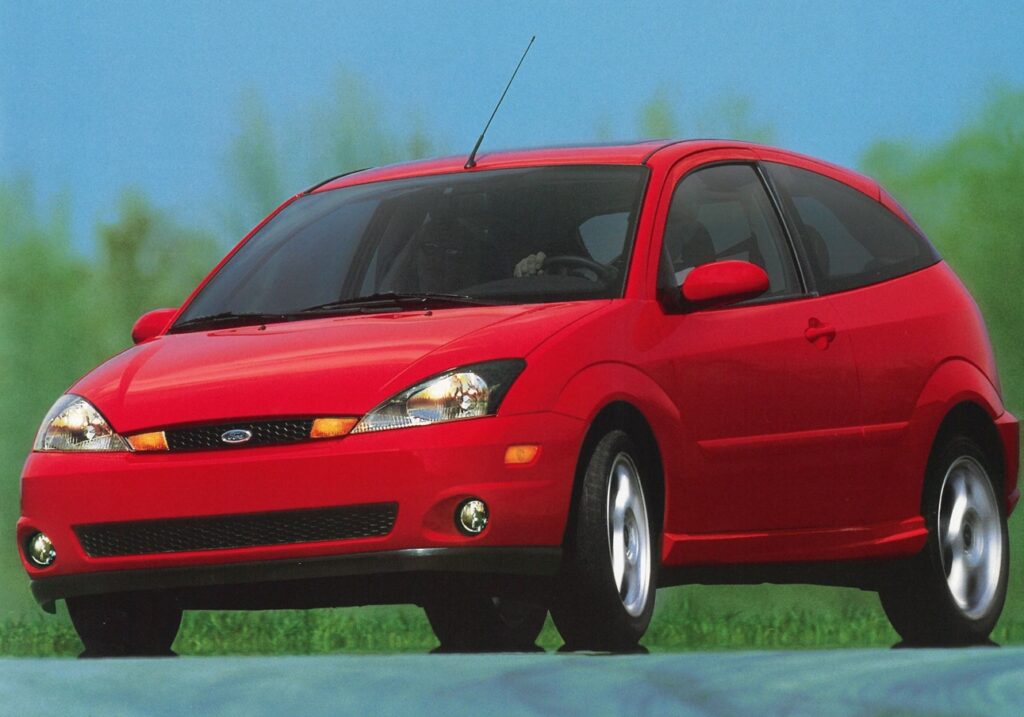
Initially launched as a 3-door hatchback, 4-door sedan and 5-door wagon. The 5-door hatchback joined the line-up later in 2002, citing market demand that Ford of America didn’t really anticipate from launch. Some special limited editions were also released at certain intervals to spruce up interest. The biggest change came in 2002, dreamt by the “Special Vehicle Team” part of Ford.
After some co-development with Ford of Europe engineers, the hot hatch SVT Focus was born. The ST170 also originated from this engineering team and was introduced at the same time as the SVT. In appearance they contain very little differences. Powered by the same ‘Duratec-ST’ engine, the SVT has ‘Powered by SVT’ written on the specially-designed camshaft cover and produced the same power output as the European ST170. About 14K were registered over 3 years of production.
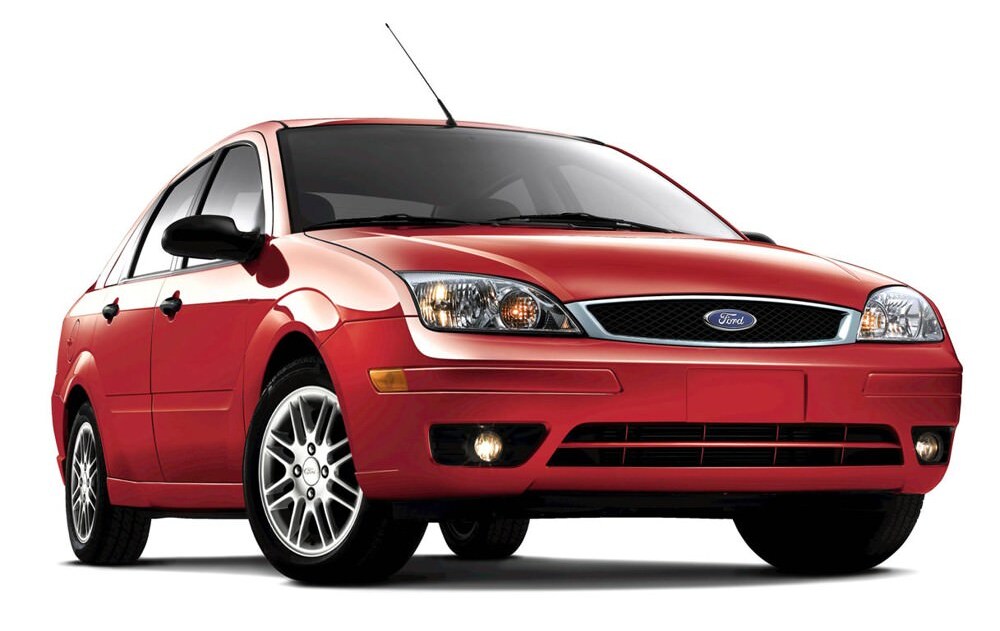
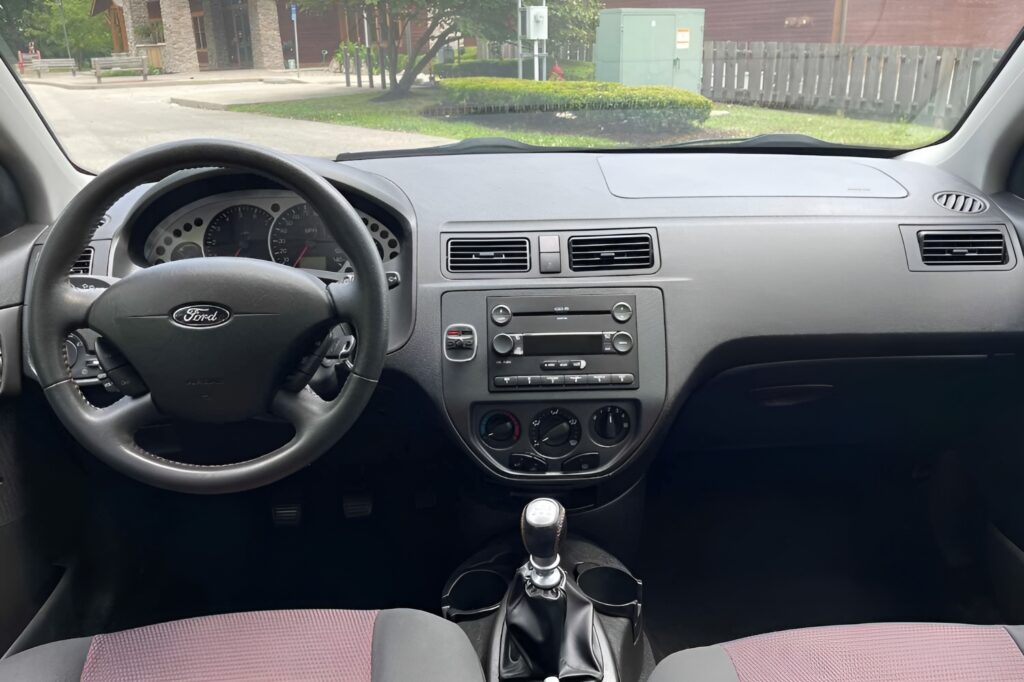
In 2005 there was a significant front-end facelift which was very different to the European facelift in 2001. A modified bumper now accommodates headlights from a European MK2 Focus, alterations to interior trim areas including door cards and a completely new dashboard was certainly eye-opening! The addition of a 2.3-Litre ‘Duratec’ pushed the power on some models to 164bhp. The specifications changed to S, SE, SES.
There was an introduction of the ST version replacing the SVT, this was only available as a 4-door sedan, mostly due to their popularity over the other bodystyles. This was equipped with a boot spoiler and re-designed front bumper incorporating an aggressive rectangular lower grille and fog light arrangement.
Production finished in 2007 after a successful period for the car, gaining a much bigger market share in it’s segment than anticipated and certainly more than most European-designed cars historically. It developed a loyal following never predicted. In total around 1.7 million examples were produced in North American during this period. This level of sales success and popularity wasn’t met by the following Focus generations!
The South America Market
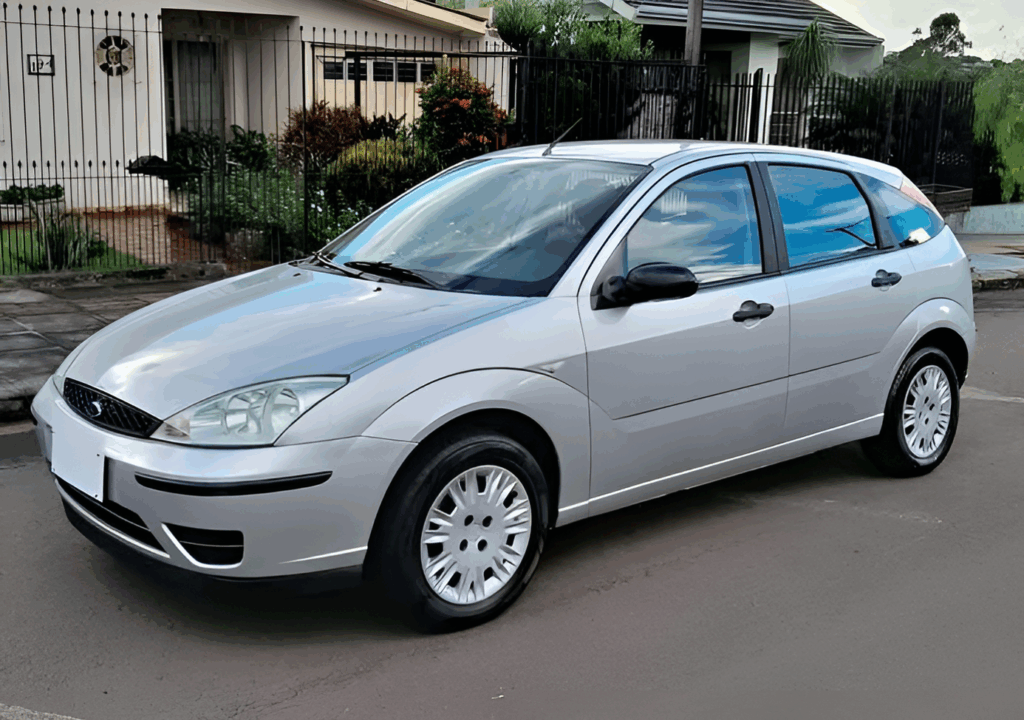
It turns out this market was fairly significant in presenting Ford with a very useable powerplant which warrants a special mention. South America is a market which requires vehicles to be fairly robust to harsh conditions and inferior fuel quality. Production started in the city of General Pacheco in Argentina. Specifications were pretty limited to a GL, GLX and Ghia, plus a few familiar engines like the 1.8-Litre TDCI unit and 2.0-Litre Duratec engine.
Very interestingly on the GL and GLX there were no exterior door mouldings, no front fog lights, no alloy wheels, no passenger airbag with black door mirrors and a European pre-facelift centre console!
The most curious development was the 8-valve 1.6-Litre ‘Rocam’ engine. Designed and produced by Ford of Brazil, it was a vastly re-designed Sigma engine. It’s design uses a timing chain, a ‘roller-finger’ camshaft and a cast iron block construction. This created a less refined but more suited engine to the environment of the market which could be used with a ‘Flex-fuel’ system which allowed the car to function on E85 petrol or bio-ethanol.
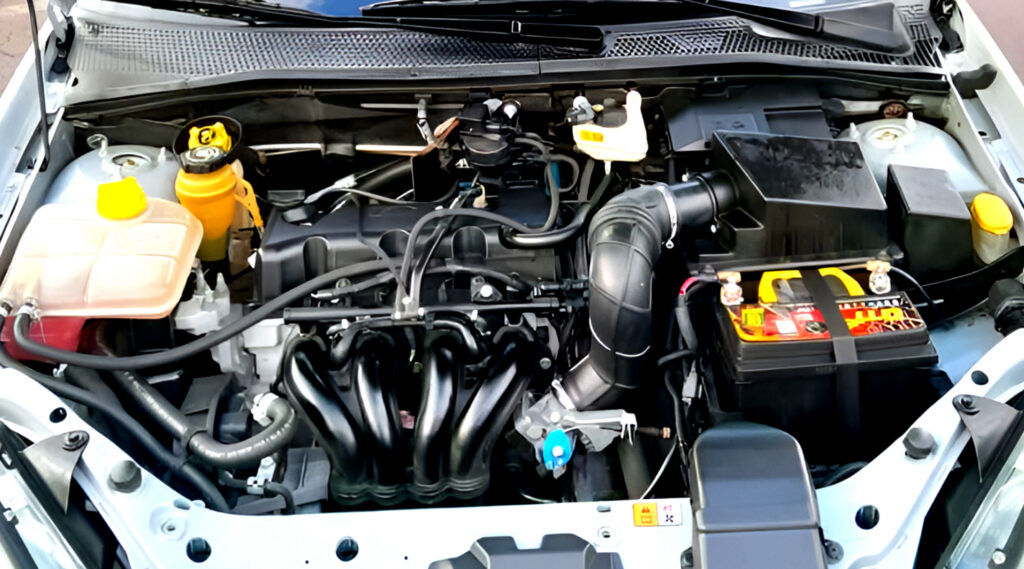
The Rocam engine turned out to be a surprising success and ended up in Europe as the renamed ‘Duratec 8V’ fitted in the Ford Ka to replace the ancient OHV Endura unit.
Production completely ended in 2008 after producing around 51,000 examples (mostly for the Brazil market), the last models being the GL and GLX specifications in 4-Door Saloon form only, fitted with the 1.6-Litre Rocam engine.